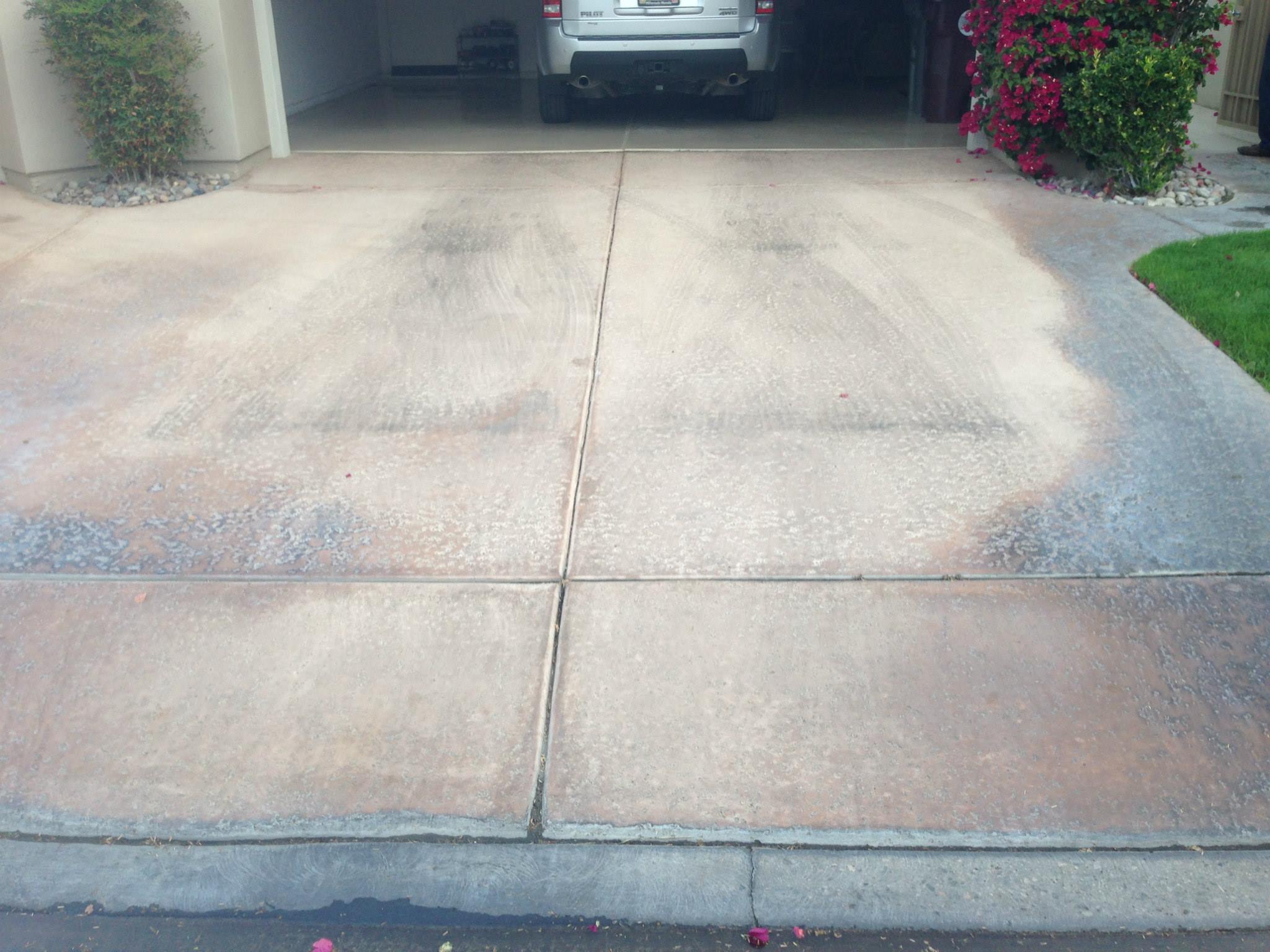
White stains on concrete frustrate homeowners because they don’t behave like normal dirt. You wash them off, and they come right back. In many cases, the issue isn’t surface grime — it’s either efflorescence or calcium buildup, and the treatment depends on which one it is.
Understanding the difference is critical if you want results that actually last.
Efflorescence is a white, powdery residue that forms when moisture moves through concrete and carries soluble salts to the surface. When the water evaporates, the salts remain behind.
Efflorescence is most common on newer concrete, masonry, and block walls, especially in areas with moisture movement.
Common causes include:
Efflorescence often feels chalky and may disappear temporarily when wet, only to reappear as it dries.
Calcium stains come from external water sources, not moisture traveling through the concrete. Hard water leaves mineral deposits behind when it evaporates on the surface.
Common sources include:
These stains usually appear as crusty, white or gray deposits that bond tightly to the surface.
Efflorescence is a moisture-driven issue from inside the concrete. Calcium stains are mineral deposits from outside the surface.
That’s why efflorescence often returns after cleaning, while calcium stains slowly worsen over time if not treated correctly.
Treating the wrong problem leads to wasted time and frustration.
Pressure washing may remove loose residue, but it doesn’t address the source of the staining. In some cases, pressure washing actually accelerates recurrence by introducing more moisture into the surface.
For efflorescence, moisture must be managed.
For calcium stains, minerals must be dissolved chemically.
Force alone doesn’t solve either issue.
Homeowners often try vinegar, acids, or repeated washing. While these methods may lighten stains, they often:
Without identifying the stain type first, results are almost always short-lived.
Professionals look at:
Once identified, the correct treatment can be applied safely and effectively.
Efflorescence removal focuses on gentle cleaning paired with moisture control. This may include:
Treating the symptom without managing moisture leads to repeat staining.
Calcium stains require mineral-dissolving treatments that break down deposits without damaging the surface. Once removed, preventing continued hard water exposure is key to keeping stains from returning.
This approach restores a uniform appearance safely.
Correct treatment stops the cycle.
Avoids etching and damage.
No more trial-and-error cleaning.
Clean surfaces stay clean longer.
Once homeowners understand that white stains are chemical and moisture-related, it becomes clear why pressure washing alone doesn’t work.
Correct diagnosis is the difference between short-term improvement and lasting results.

If white stains keep returning no matter how often you wash, professional identification and treatment can finally solve the problem.
Schedule a free consultation today and get the right solution for efflorescence or calcium stains — the first time.
Give your home or business the care it deserves. Request a free quote now and let Dirt Defense provide spotless results with unmatched reliability.