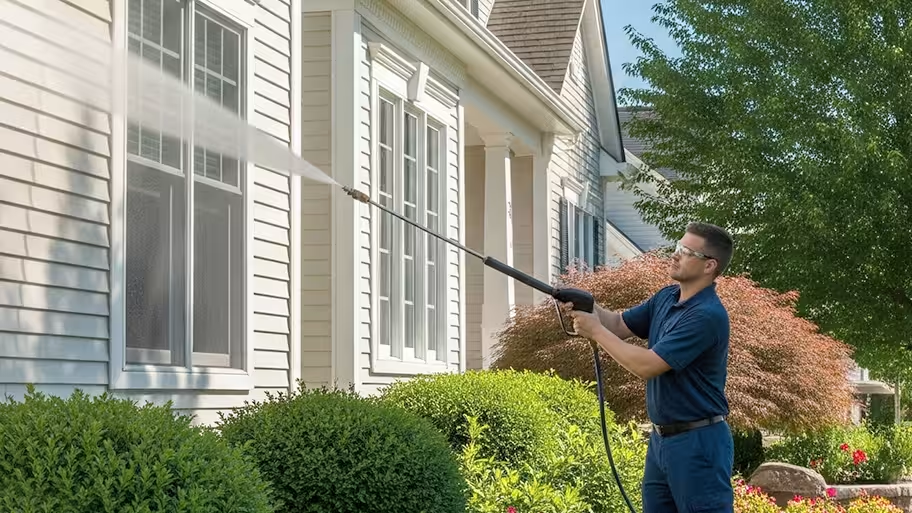
Many homeowners use “pressure washing” as a catch-all term for exterior cleaning. In reality, house washing and pressure washing are two very different services with very different purposes.
Choosing the wrong method can lead to surface damage, streaking, or short-lived results. Understanding the difference helps protect your home and ensures better outcomes.
House washing is a low-pressure cleaning method designed specifically for siding, trim, soffits, and exterior walls.
It relies on:
House washing cleans without forcing water into siding or damaging finishes.
Pressure washing uses higher pressure to clean hard, durable surfaces that can withstand force.
It’s best suited for:
Pressure washing removes embedded dirt and grime from porous hardscapes.
Applying pressure meant for concrete to siding is one of the most common and costly mistakes.
High pressure can:
House washing avoids these risks entirely.
Professional house washing uses cleaning agents that break down algae, mildew, dirt, and oxidation without pressure.
Once treated, buildup releases naturally and is gently rinsed away. This delivers a clean exterior without stress on the home’s structure.
Pressure washing removes visible dirt, but it often leaves algae spores behind. House washing treatments neutralize those spores at the root.
This means:
It’s a preventative approach, not just a rinse.
Pressure washing is ideal for:
These surfaces benefit from controlled pressure and surface cleaners designed for durability.
House washing should always be used for:
Any vertical surface attached to the home should be treated gently.
Most homes benefit from both house washing and pressure washing — just on different surfaces.
A full exterior cleaning plan typically includes:
This delivers a fully cleaned exterior without damage.
DIY cleaning often uses one machine for every surface. This leads to overuse of pressure where it isn’t safe.
Professional services choose the method based on surface type, not convenience.
When the right method is used, siding stays brighter longer, concrete looks uniform, and surfaces age more slowly.
Correct technique makes a visible difference in both appearance and longevity.
Exterior damage from improper pressure can be expensive to repair. Using the correct cleaning method protects finishes and structural components.
House washing preserves your home — it doesn’t just clean it.

If you’re unsure whether your home needs house washing, pressure washing, or both, a professional assessment can guide the decision.
Schedule a free consultation today and get the right cleaning method for every surface — safely, effectively, and with long-lasting results.
Give your home or business the care it deserves. Request a free quote now and let Dirt Defense provide spotless results with unmatched reliability.