Pool Deck Cleaning in DFW: How to Keep Your Outdoor Space Safe and Beautiful
If you own a pool in the Dallas–Fort Worth area, you already know how central that outdoor space is to your home life. DFW's long warm seasons mean your pool and the deck surrounding it get serious use from spring through fall — and sometimes well beyond. Family gatherings, weekend cookouts, kids splashing around on summer afternoons — your pool deck is where a lot of life happens.
But pool decks are also one of the most demanding surfaces on your property when it comes to maintenance. They are constantly exposed to water, chemicals, sunscreen, foot traffic, and the full force of DFW's climate. Over time that combination creates a surface that is not just dirty and unattractive but genuinely dangerous. Algae, mold, calcium deposits, and embedded grime turn pool decks into slip hazards that put everyone who uses the space at risk.
Professional pool deck cleaning in DFW is not optional maintenance — it is a safety requirement for any homeowner who wants to use their outdoor space responsibly. This guide covers everything you need to know about keeping your pool deck clean, safe, and looking its best throughout the year.
Why Pool Decks in DFW Get Dirty Faster Than Any Other Surface
Pool decks face a unique combination of challenges that no other surface on your property deals with simultaneously. Understanding those challenges explains why professional pool deck cleaning in DFW is so important and why the buildup happens so quickly.
Water is the constant factor. Pool decks are perpetually wet — from splashing, from swimmers getting in and out, from the pool equipment, and from DFW's frequent spring and summer rain storms. That constant moisture exposure creates ideal conditions for algae and mold to establish and spread. Algae in particular thrives in environments where moisture and warmth combine — which describes a DFW pool deck for the majority of the year.
Pool chemicals complicate the picture further. Chlorine and other pool treatment chemicals splash onto the deck surface continuously during pool use. Over time those chemicals contribute to surface discoloration, calcium deposit formation, and a breakdown of sealants and surface treatments that makes the deck even more susceptible to staining and biological growth.
Sunscreen and body oils from swimmers transfer to the deck surface constantly and create a sticky film that attracts dirt and accelerates the buildup of grime. These deposits are oily in nature, which means they do not respond to basic water pressure and require the right cleaning solutions to lift them properly.
DFW's intense sun creates UV damage and heat stress on pool deck surfaces that causes discoloration, surface oxidation, and in some cases surface degradation that makes the deck look significantly older than it is. And the combination of heat and moisture that defines a DFW summer creates relentless algae growing conditions that never really let up from April through October.
The Safety Risk of a Dirty Pool Deck
This needs to be stated clearly because it is the most important reason to prioritize professional pool deck cleaning in DFW — a dirty pool deck is a genuine safety hazard.
Algae on a wet pool deck surface is one of the most slippery substances that exists in a residential setting. When pool deck surfaces develop algae growth — which happens quickly in DFW's climate — they become treacherous when wet. Given that pool decks are almost always wet during use, algae growth essentially turns your pool deck into a slip and fall zone every time anyone uses the space.
The consequences of a slip and fall on a pool deck are serious. Hard concrete and stone surfaces leave no room for error when someone goes down — and the proximity to the pool adds an additional drowning risk if someone falls into the water after losing their footing on the deck. Children, elderly family members, and anyone running near the pool are at particular risk.
Professional pool deck cleaning in DFW eliminates algae completely from the deck surface — not just superficially but at the root level, so the slippery conditions are removed and do not return quickly. This is not a cosmetic benefit — it is a direct safety improvement that every pool owner in DFW should take seriously.
What Builds Up on DFW Pool Decks Over Time
Understanding what is actually accumulating on your pool deck helps explain why professional cleaning delivers such dramatically better results than basic hosing down or consumer-grade cleaning attempts.
Algae and Mold
As discussed above, algae is the primary safety concern and one of the most aggressive forms of buildup on DFW pool decks. Mold growth accompanies algae in shaded areas and contributes to both the safety hazard and the surface degradation that shortens the lifespan of pool deck materials.
Calcium and Mineral Deposits
This is one of the most distinctive and stubborn forms of buildup on pool decks in DFW. Calcium deposits form when pool water splashes onto the deck surface and evaporates, leaving behind the mineral content of the water as a white or grayish crusty residue. Over time these deposits accumulate into thick, rough deposits that are unsightly, difficult to remove, and can actually damage pool deck surfaces if left untreated.
DFW's water is known for being hard — meaning it has high mineral content. That hardness accelerates calcium deposit formation on pool decks compared to areas with softer water, making calcium removal a particularly important part of professional pool deck cleaning in the Dallas–Fort Worth area.
Sunscreen and Body Oil Residue
The combination of sunscreen, body oils, and general skin contact residue that transfers to pool deck surfaces during regular use creates a film that attracts dirt and grime. This type of buildup requires the right degreasing solutions to remove properly — basic pressure washing alone will not eliminate it.
Rust Staining
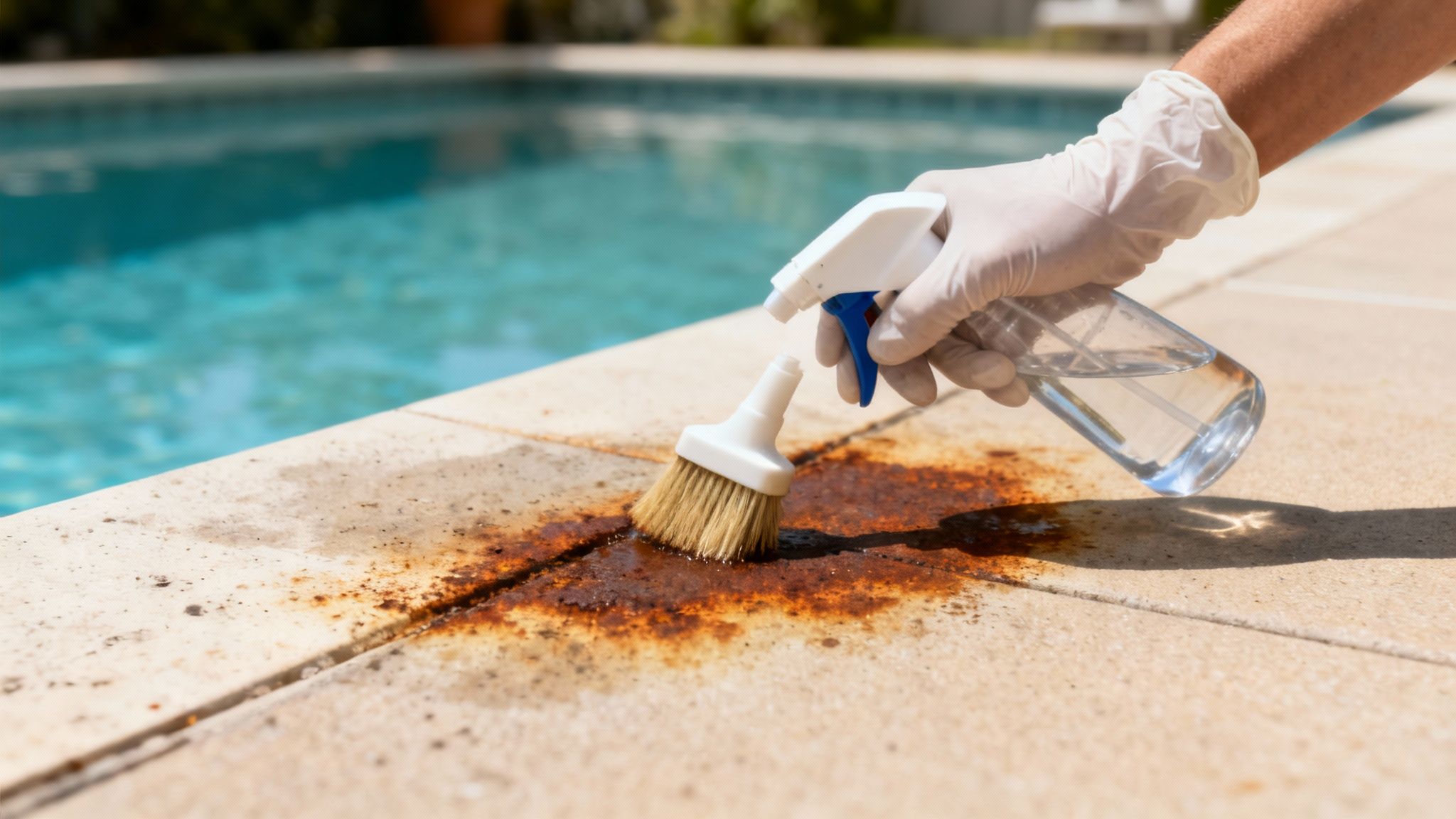
Metal furniture, pool equipment, and fixtures on or near the pool deck create rust transfer staining on the deck surface over time. Rust stains on concrete are stubborn and require specific treatment solutions that target the iron compounds causing the discoloration.
General Dirt and Grime
Foot traffic from the yard, wind-blown debris, pollen, and atmospheric dirt all accumulate on pool deck surfaces continuously. Combined with the moisture that is always present around a pool, this general grime embeds into the surface texture and creates a layer of buildup that dulls the appearance and contributes to the overall deterioration of the deck surface.
The Different Pool Deck Surface Types and How They Are Cleaned
Pool decks in DFW are built from a variety of materials, and professional pool deck cleaning requires different approaches for each one.
Concrete Pool Decks
Standard concrete pool decks are the most common in DFW and can handle professional pressure washing combined with appropriate pre-treatment solutions. The key is using the right cleaning solutions for the specific types of buildup present — degreasing solutions for sunscreen and oil residue, calcium treatment solutions for mineral deposits, and algae-killing solutions for biological growth — before applying pressure cleaning for the final surface clean.
Stamped and Decorative Concrete
Stamped concrete pool decks require more careful treatment than standard concrete because the decorative finish and sealant can be damaged by excessive pressure. Professional cleaning uses calibrated lower pressure combined with surface-appropriate solutions that clean effectively without degrading the decorative finish.
Travertine and Natural Stone
Natural stone pool decks are beautiful but require careful professional treatment. Stone is porous and susceptible to damage from the wrong cleaning solutions or excessive pressure. Professional pool deck cleaning for travertine and natural stone uses pH-neutral solutions and appropriate pressure levels that clean the surface thoroughly without etching or damaging the stone.
Pavers
Paver pool decks accumulate algae, moss, and grime in the joints between pavers as well as on the paver surfaces themselves. Professional cleaning addresses both the paver surfaces and the joints to deliver a thorough result that eliminates biological growth from the entire deck area.
How Often Should DFW Homeowners Schedule Pool Deck Cleaning
For most pool owners in the Dallas–Fort Worth area, professional pool deck cleaning twice a year is the recommended baseline — once in spring before pool season begins and once in fall after pool season ends.
The spring cleaning prepares the deck for peak use season — removing the buildup from fall and winter and ensuring the surface is clean, safe, and free of algae going into the months when the pool gets its heaviest use. The fall cleaning removes the accumulated sunscreen residue, calcium deposits, and biological growth from a full season of pool use before the deck sits through the cooler months.
Homes with heavy tree coverage near the pool, significant shade on the deck surface, or pools that see particularly heavy use may benefit from three cleanings per year. Calcium deposit formation in DFW's hard water areas can be aggressive enough that mid-season cleaning makes sense to prevent deposits from building up to the point where removal becomes more difficult.
Signs Your DFW Pool Deck Needs Professional Cleaning Now
Green or black discoloration anywhere on the deck surface is algae and needs to be addressed immediately given the safety implications. White or grayish crusty deposits around the pool edge and on the deck surface are calcium buildup that will worsen the longer it is left untreated. A general dullness or gray tint to the deck surface that was not there when the deck was new indicates embedded grime and surface oxidation. Dark staining in the texture of the concrete or between pavers is mold or algae penetrating the surface. And if your deck feels slippery underfoot even when you are being careful, that is a direct safety warning that professional cleaning is needed immediately.
What the Dirt Defense Pool Deck Cleaning Process Looks Like
At Dirt Defense Pressure Washing, our pool deck cleaning service in DFW is designed to address every type of buildup thoroughly and safely — delivering a surface that is genuinely clean, genuinely safe, and looks dramatically better from the moment we finish.
Every job starts with a surface assessment to identify the deck material, the types of buildup present, and any specific areas of concern. We then provide a transparent upfront quote before any work begins. On the day of service our team applies the appropriate pre-treatment solutions for the specific issues on your deck — algae treatment, calcium removal solutions, degreasing solutions for sunscreen and oil residue — and allows them to dwell before beginning the pressure cleaning process.
We use professional-grade equipment calibrated for your specific deck material to deliver an even, thorough clean across the entire pool deck area. We pay particular attention to the pool edge where calcium deposits accumulate most aggressively and shaded areas where algae and mold growth tends to be most severe. Before we leave we do a complete inspection to confirm every area of the deck meets our standards.
We are fully licensed and insured and our 4.9-star Google rating from homeowners throughout the Dallas–Fort Worth area reflects the consistent quality and care we bring to every pool deck cleaning job.

Your pool deck should be the safest and most enjoyable part of your outdoor space. Do not let algae, calcium deposits, and grime turn it into a hazard. Dirt Defense Pressure Washing provides professional pool deck cleaning throughout the Dallas–Fort Worth Metroplex that restores safety, appearance, and cleanliness to your outdoor living area. Request your free quote today at dirtdefensepw.com and let's get your pool deck ready to enjoy.
Give your home or business the care it deserves. Request a free quote now and let Dirt Defense provide spotless results with unmatched reliability.