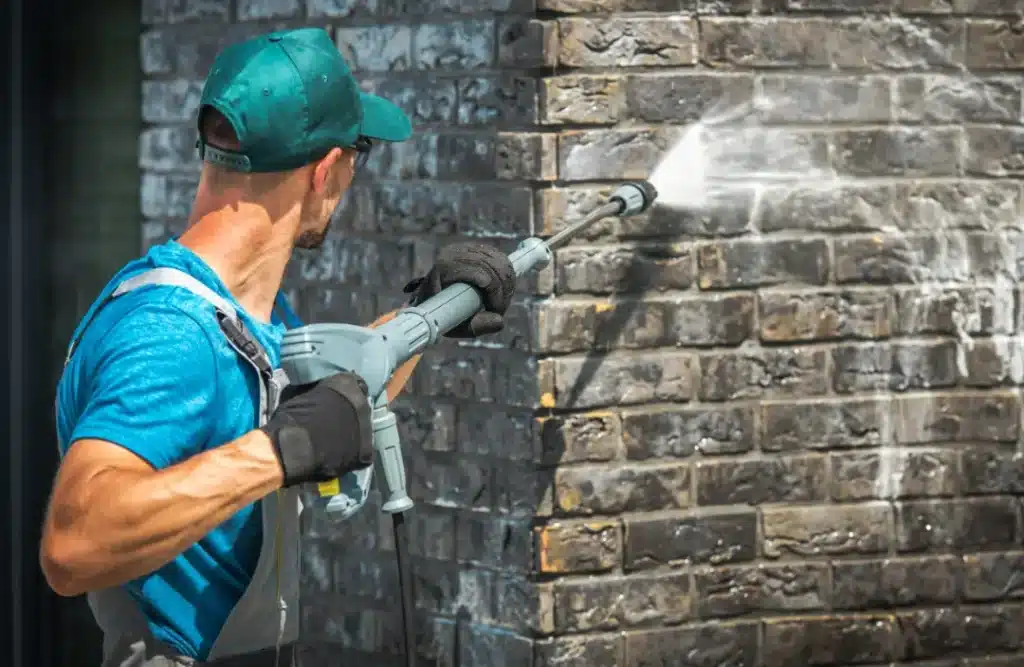
Retaining walls do a lot of quiet structural work in DFW landscapes — holding back soil, managing slopes, and framing planting beds — but they rarely get any maintenance attention until they're visibly stained, streaked, or covered in algae. Because they're often built from porous materials and positioned where water naturally drains and collects, retaining walls are actually one of the faster surfaces to show discoloration on a property.
Why Retaining Walls Stain Quickly
Water is constantly moving across, through, and behind a retaining wall by design — that's literally its job. This constant moisture exposure, combined with DFW's humidity and the soil and mineral content naturally present in runoff, creates ideal conditions for algae, mildew, and efflorescence (a white, chalky mineral deposit) to build up on the wall's surface over time.
Common Retaining Wall Staining Issues
Algae and mildew growth — typically appears as green or black staining, most concentrated where water regularly drains across the wall face or where shade keeps the surface damp longer.
Efflorescence — a white, powdery mineral deposit that forms as water moves through concrete or stone and evaporates, leaving mineral salts behind on the surface; common on newer retaining walls especially.
General dirt and soil staining — from splashback during rain or irrigation, especially near the base of the wall where soil is closest to the surface.
Material-Specific Cleaning Approaches
Concrete block retaining walls — cleaned with the right combination of pressure and solution to lift algae and efflorescence without eroding the block surface or damaging mortar joints.
Natural stone retaining walls — require a gentler soft wash approach to preserve the stone's natural texture and any protective sealant that may be present.
Timber retaining walls — need reduced pressure to avoid damaging wood fibers, with treatment focused on mildew removal rather than aggressive surface stripping.
Why This Matters Beyond Appearance
Left untreated, algae and mildew growth can actually accelerate material degradation over time, particularly on porous concrete and natural stone, by trapping moisture against the surface. Regular cleaning isn't purely cosmetic — it's a reasonable step toward protecting the wall's long-term condition, especially for walls that see consistent water flow.
Drainage Considerations We Watch For
While cleaning a retaining wall, our crew often notices related issues — heavier-than-normal efflorescence, unusual staining patterns, or visible water paths that can indicate a drainage problem behind the wall. We'll flag anything that looks like it may need further attention beyond a standard cleaning, since catching drainage issues early is far less costly than addressing wall damage later.
Pairing With Other Landscape Cleaning
Retaining wall cleaning pairs naturally with patio, stone edging, and fence cleaning, especially on properties where these features are all part of the same backyard or front yard landscape design.
What Affects Cost
Pricing depends on wall length, height, material, and severity of algae, mildew, or efflorescence buildup. Walls that haven't been cleaned in several years typically need more intensive treatment than those on a regular maintenance schedule.
The team at Dirt Defense Pressure Washing keeps your retaining walls looking clean while helping protect the material underneath.

Ready to restore your retaining wall? Get your free quote from Dirt Defense Pressure Washing today.
Give your home or business the care it deserves. Request a free quote now and let Dirt Defense provide spotless results with unmatched reliability.