Rust Treatment and Removal in DFW: How to Eliminate Stubborn Rust Stains From Your Property
If you have ever noticed those distinct orange, brown, or reddish stains spreading across your driveway, patio, sidewalk, or pool deck, you already know how stubborn and unsightly rust stains can be. They stand out against concrete and stone surfaces in a way that no amount of regular cleaning seems to touch, and they have a way of making an otherwise clean, well-maintained property look neglected and worn.
Rust stains are one of the most common exterior surface problems for homeowners across the Dallas–Fort Worth area, and they are also one of the most misunderstood. Most homeowners either accept them as permanent or attempt to remove them with methods that do not work and sometimes make the staining worse. Professional rust treatment in DFW is the solution — and understanding what causes rust stains, why they are so difficult to remove, and what professional treatment actually does makes a significant difference in how you approach the problem.
This guide covers everything DFW homeowners need to know about rust stains — where they come from, what makes them so persistent, and how Dirt Defense eliminates them completely from every exterior surface on your property.
What Causes Rust Stains on DFW Home Exteriors
Rust stains on exterior surfaces are caused by iron oxidation — the chemical reaction that occurs when iron or steel contacts water and oxygen and begins to corrode. The resulting iron oxide — rust — transfers from the corroding metal source to adjacent surfaces, bonding to concrete, stone, and other porous materials and creating the orange-brown staining that is so visually striking and so difficult to remove.
Understanding where the iron source is coming from is the first step in addressing rust staining on your property. In DFW, there are several common culprits.
Fertilizer
This is one of the most widespread causes of rust staining on DFW driveways, sidewalks, and patios. Many lawn fertilizers contain iron as a nutrient component, and when fertilizer granules land on concrete or stone surfaces and get wet — from rain or irrigation — the iron in the fertilizer oxidizes and bonds to the surface. The result is the distinctive orange streaking and spotting pattern that appears on driveways and sidewalks after fertilization. In DFW where lawn care is taken seriously and fertilization is common throughout the growing season, fertilizer rust staining is extremely prevalent.
Metal Furniture and Decorative Items
Outdoor furniture, planters, fire pits, decorative sculptures, and other metal items sitting on patio and pool deck surfaces create rust transfer staining as the metal weathers and corrodes. The rust from the bottom of metal furniture legs transfers directly to the concrete or stone beneath, creating circular or contact-pattern rust stains that are immediately obvious and persistent.
Irrigation Systems
DFW's water supply contains iron, and irrigation systems that pull from groundwater sources or that have iron pipes and fittings can deposit iron-rich water on driveways, sidewalks, patios, and exterior walls over time. As that water evaporates, the iron content oxidizes and bonds to the surface — creating rust staining patterns that follow the spray pattern of the irrigation system. This type of rust staining is particularly common along driveway edges, on sidewalks adjacent to lawn areas, and on the lower portions of home exteriors near ground-level irrigation heads.
Metal Edging and Landscape Fixtures
Steel landscape edging, metal garden borders, metal stakes, and iron fixtures in landscaping beds adjacent to concrete surfaces corrode over time and transfer rust staining to adjacent hardscaping. This type of staining often appears as streaks running from the edge of a landscaping bed across adjacent concrete surfaces.
Downspouts and Gutters
Metal downspouts and gutters that are corroding or that have rust developing at connection points and fasteners can transfer rust staining to the exterior walls, concrete, and surfaces directly below them. This creates vertical rust streak patterns on siding and horizontal rust staining on concrete adjacent to downspout discharge points.
Pool Equipment and Fixtures
Pool equipment, metal handrails, pool ladders, and other iron or steel fixtures adjacent to pool decks are a common source of rust staining on pool deck surfaces in DFW. Pool chemicals can accelerate the corrosion of metal fixtures, intensifying the rate of rust transfer to pool deck surfaces.
Why Rust Stains Are So Difficult to Remove
This is the source of enormous frustration for DFW homeowners who have attempted to address rust staining themselves. Rust stains are chemically bonded to the surface they stain — they are not sitting on top of the concrete or stone, they are part of it at a molecular level. This is why pressure washing alone, scrubbing, and standard cleaning products have no effect on rust staining. You are not dealing with a surface deposit that water and friction can dislodge. You are dealing with a chemical bond that requires a chemical solution to break.
Rust stains on concrete and stone require specific acid-based or chelating treatment solutions that react with the iron oxide compounds and break the chemical bond between the rust and the surface material. These solutions are not available in consumer cleaning products in the formulations and concentrations that actually work on established rust staining — which is why DIY rust removal attempts consistently fail to deliver meaningful results.
Making the situation worse, some DIY approaches to rust staining — particularly the use of bleach — actually intensify the staining rather than removing it. Bleach has no effect on iron oxide and can actually set the stain more deeply into porous surfaces. Homeowners who have attempted bleach treatment on rust stains often find the staining is more stubborn after the attempt than it was before.
Professional rust treatment in DFW uses the right chemical solutions in the right concentrations, applied with the right technique, to break down iron oxide compounds and remove rust staining completely from exterior surfaces.
The Surfaces Affected by Rust Staining in DFW
Rust staining can develop on virtually any exterior surface that contacts an iron source and moisture. Here is where professional rust treatment makes the most significant difference for DFW homeowners.
Concrete Driveways and Sidewalks
Concrete is the most commonly affected surface for rust staining in DFW, primarily because of fertilizer application and irrigation system contact. The porous nature of concrete means rust compounds penetrate the surface quickly and bond deeply, making professional treatment essential for complete removal.
Patios and Pool Decks
Metal furniture, pool equipment, and irrigation contact make patios and pool decks highly susceptible to rust staining. Pool deck rust staining from corroding metal handrails and fixtures is particularly common and particularly stubborn given the constant moisture exposure that accelerates both corrosion and staining.
Exterior Walls and Siding
Rust staining on exterior walls typically comes from corroding metal fixtures — window frames, shutters, decorative elements, and fasteners — or from irrigation overspray. Vertical rust streaking on siding and stucco is a distinctive and highly visible form of rust damage that professional treatment addresses specifically.
Stone and Paver Surfaces
Natural stone and paver surfaces develop rust staining from metal edging, landscape fixtures, and irrigation contact. Stone surfaces require particular care in rust treatment because the wrong chemical solutions can etch or discolor natural stone while treating the rust staining.
Cast Stone and Decorative Concrete
Cast stone features, decorative columns, retaining walls, and architectural concrete elements develop rust staining from embedded metal reinforcement as well as surface contact sources. These decorative features require careful treatment to remove rust staining without damaging the decorative surface.
Why Professional Rust Treatment Delivers Results DIY Cannot
The chemistry of rust removal requires professional-grade treatment solutions that are simply not available in consumer products. Professional rust treatment solutions contain the specific chemical compounds — oxalic acid, citric acid, or chelating agents depending on the surface and stain severity — in concentrations that actually break down iron oxide bonds and allow the rust compounds to be rinsed away from the surface.
Beyond the chemistry, professional application technique matters significantly. Treatment solutions need to be applied correctly, allowed to dwell for the appropriate time, and rinsed with the right pressure and technique for the specific surface being treated. Over-application or incorrect technique can cause surface damage, particularly on natural stone, cast stone, and decorative concrete — which is why professional expertise is important even when the right chemical solutions are being used.
At Dirt Defense Pressure Washing, our rust treatment service in DFW combines the right professional-grade treatment solutions with the expertise to apply them correctly on every surface type. The result is complete rust stain removal that restores the appearance of your surfaces without causing any additional damage in the process.
Preventing Rust Stains From Returning
Rust stain removal is most effective when combined with addressing the source of the rust transfer. Here is what DFW homeowners can do to reduce rust staining recurrence after professional treatment.
When applying lawn fertilizer, sweep or blow any granules off concrete and paved surfaces before they get wet. This simple step prevents the most common cause of rust staining on DFW driveways and sidewalks. Checking irrigation system heads for proper aim so they are not directing water onto concrete and exterior surfaces reduces iron deposit accumulation. Placing protective pads or feet under metal outdoor furniture prevents direct metal-to-surface contact that causes furniture rust staining. Inspecting metal fixtures, gutters, and downspouts for corrosion and addressing rust development before it becomes a transfer staining source protects adjacent surfaces.
For surfaces that are particularly susceptible to rust staining — particularly concrete driveways in areas with iron-rich irrigation water — professional concrete sealing after rust treatment creates a barrier that reduces the penetration of iron compounds into the surface and makes future rust staining easier to address.
What the Dirt Defense Rust Treatment Process Looks Like
At Dirt Defense Pressure Washing, every rust treatment job in DFW starts with identifying the source of the staining and the type of surface being treated. Different surfaces require different treatment approaches, and understanding the chemistry of the specific rust staining present ensures the right solution is applied for complete removal.
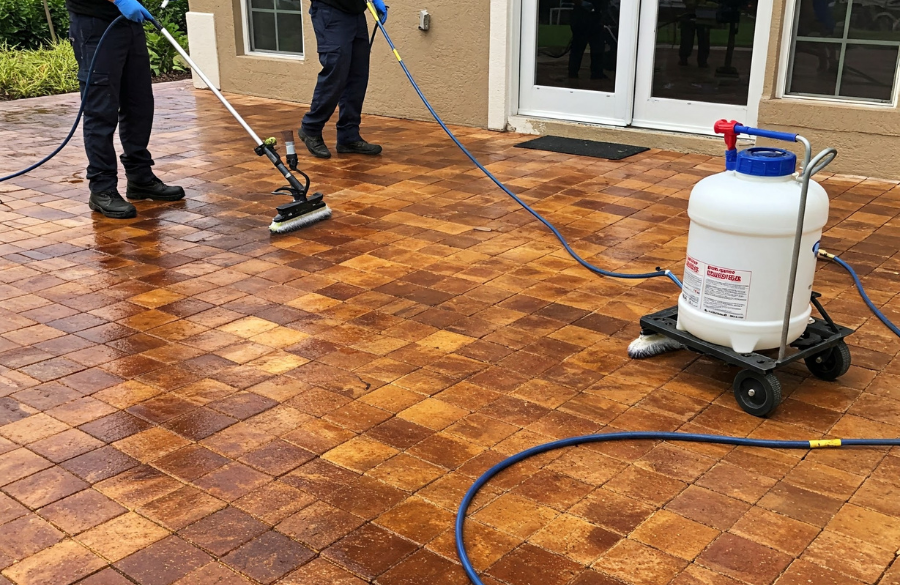
We provide a transparent, upfront quote before any treatment begins. On the day of service our team applies professional-grade rust treatment solutions appropriate for the specific surface — allowing them to dwell and react with the iron oxide compounds before thorough rinsing that removes the treated rust deposits completely. For surfaces with multiple types of staining — rust combined with algae, oil, or calcium — we address each staining type with the appropriate treatment solution as part of a comprehensive surface cleaning service.
We are fully licensed and insured, our pricing is always transparent, and we do not leave a job until the results meet our standards. Our 4.9-star Google rating from homeowners throughout the Dallas–Fort Worth area reflects the consistent quality and expertise we bring to every rust treatment and exterior cleaning job.

Rust stains do not have to be permanent. Dirt Defense Pressure Washing provides professional rust treatment and removal throughout the Dallas–Fort Worth Metroplex that eliminates orange and brown staining from driveways, patios, pool decks, siding, and every exterior surface on your property. Request your free quote today at dirtdefensepw.com and let's restore your surfaces to the clean, stain-free appearance they deserve.
Give your home or business the care it deserves. Request a free quote now and let Dirt Defense provide spotless results with unmatched reliability.