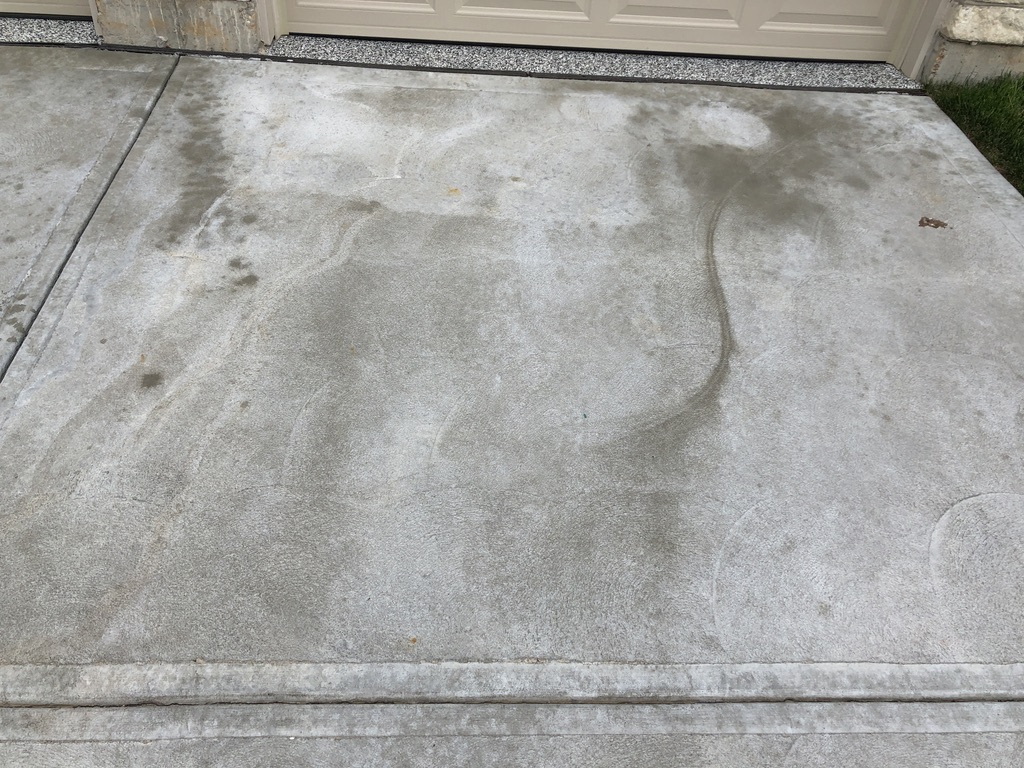
Homeowners often notice white, chalky stains on driveways, sidewalks, pool decks, and patios and assume it’s leftover soap or dirt. In reality, these stains are usually calcium or mineral deposits, and they behave very differently than normal grime.
Calcium buildup bonds tightly to concrete. That’s why pressure washing alone rarely removes it — no matter how strong the water is.
Calcium stains form when mineral-rich water repeatedly contacts concrete and then evaporates. The minerals stay behind and slowly build up layer by layer.
Common sources include:
Over time, these minerals harden and create visible white or light gray stains.
Calcium buildup is cumulative. Each time water evaporates, more minerals are left behind. Even if stains are lightly cleaned, the underlying deposits remain and quickly resurface.
This is why homeowners often feel like concrete “never stays clean.”
Calcium deposits are mineral-based, not organic. High pressure may chip away surface dirt, but it doesn’t dissolve minerals.
In many cases, excessive pressure:
Effective calcium removal requires chemical treatment, not force.
Household acids or vinegar may lighten stains temporarily, but they’re inconsistent and often damage the surface.
DIY attempts can cause:
Professional calcium removal uses controlled solutions designed specifically for mineral deposits.
Professional calcium removal involves applying mineral-dissolving treatments that break down calcium and hard water residue safely.
The process:
This approach removes the cause of the stain — not just the symptom.
Calcium buildup is most common on:
Treating all affected areas together prevents uneven results.
Calcium buildup can create slick or uneven surfaces, especially around pools and walkways. Removing deposits restores traction and improves safety.
Clean surfaces also dry faster, reducing algae growth.
Calcium removal isn’t always needed annually. Frequency depends on water hardness and exposure.
Properties with heavy irrigation overspray may benefit from periodic treatment combined with routine exterior cleaning.
After removal, prevention matters. Helpful steps include:
Prevention slows buildup significantly.
Professional calcium removal removes deposits at the source instead of masking them. Correct treatment avoids surface damage and helps concrete stay cleaner longer.
Proper technique also protects the integrity of the concrete.
Many homeowners assume white stains mean replacement is needed. In reality, professional calcium removal often restores appearance dramatically.
Cleaning first is always the smarter, more cost-effective option.

If calcium buildup is making your concrete look chalky or dull, professional calcium removal can restore a cleaner, more uniform appearance.
Schedule a free consultation today and let your concrete look clean again — without damage or replacement.
Give your home or business the care it deserves. Request a free quote now and let Dirt Defense provide spotless results with unmatched reliability.