If you’ve been researching exterior cleaning, you’ve probably seen the term soft washing come up more often. Many homeowners assume it’s just another name for pressure washing, but that’s not the case.
Soft washing is a safer, more effective cleaning method for many home exteriors. It focuses on treating the cause of stains instead of relying on force, which is why more homeowners are choosing it for siding, roofs, and delicate surfaces.
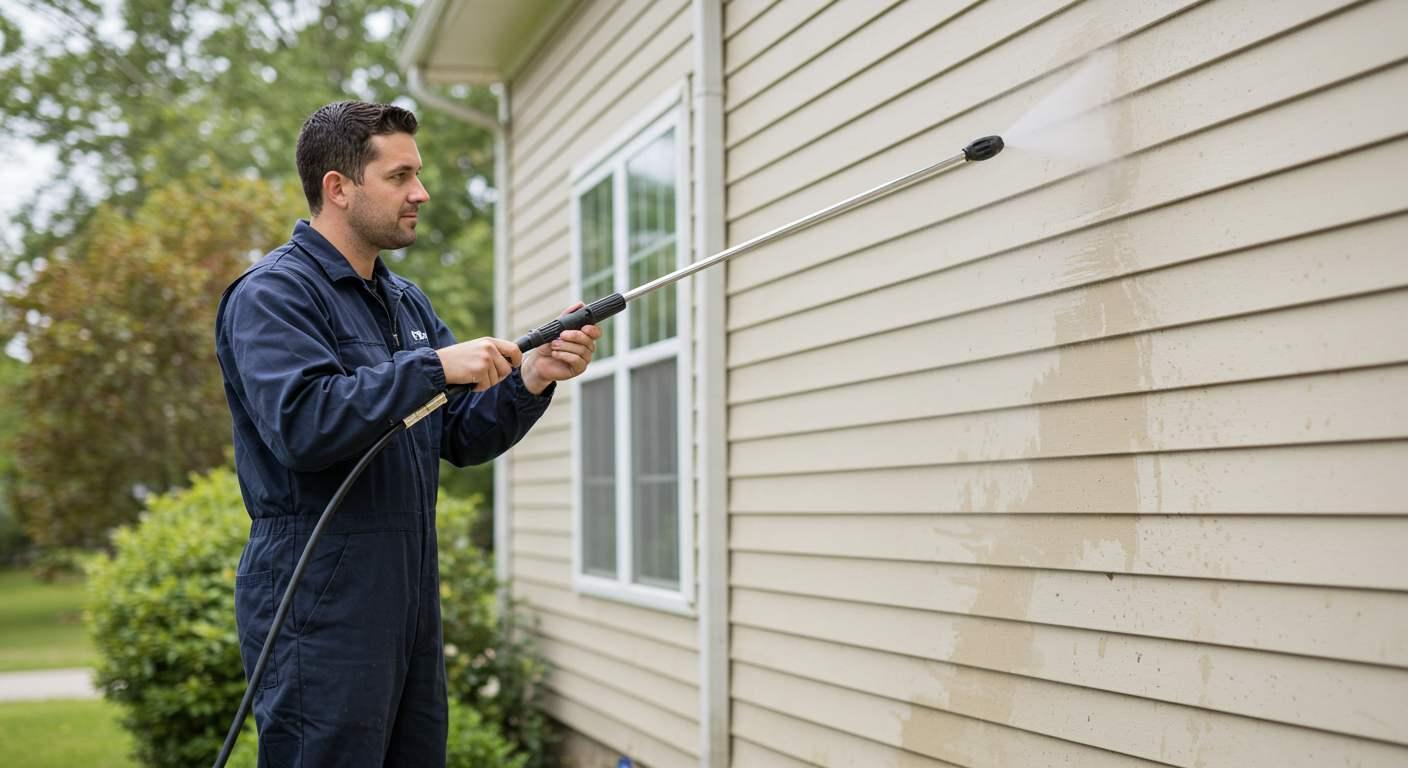
Soft washing uses low water pressure combined with specialized cleaning solutions to remove dirt, algae, mildew, and organic buildup. Instead of blasting surfaces clean, the solution breaks down growth at the root.
Once the buildup is treated, gentle rinsing removes stains evenly without damaging the surface.
This method is especially effective for areas that shouldn’t be cleaned with high pressure.
The biggest difference between soft washing and pressure washing is force.
Pressure washing relies on strong water pressure to remove grime. Soft washing relies on treatment and time.
Soft washing is commonly used for:
Pressure washing is better suited for:
Using the right method for each surface prevents damage and delivers better results.
One of the biggest reasons homeowners switch to soft washing is how long the results last. Because organic growth is treated at the source, it takes much longer for stains to return.
Pressure washing alone may remove visible buildup, but spores often remain behind. Soft washing neutralizes those spores, slowing regrowth significantly.
Using high pressure on siding or roofs can cause problems homeowners don’t see right away. These risks include:
Soft washing avoids these risks by using minimal pressure while still delivering a deep clean.
Soft washing is especially effective in areas where algae and mildew thrive, including:
These areas respond better to treatment than force.
While soft washing sounds simple, it requires the correct solution strength and application technique. Using the wrong mixture can damage surfaces or leave residue behind.
Professional services understand how to balance effectiveness with surface protection, ensuring safe and consistent results.
Low pressure prevents cracking, peeling, and water intrusion.
Soft washing restores uniform color without streaks.
Treating spores keeps surfaces clean longer.
Fewer cleanings are needed over time.
Most homes benefit from soft washing once per year, though shaded or humid properties may need more frequent service.
Routine treatment prevents heavy buildup and keeps maintenance predictable.
As homes use more composite materials, painted surfaces, and decorative features, soft washing has become the preferred cleaning method.
It delivers professional results without unnecessary risk, making it ideal for long-term exterior care.

If your siding, roof, or exterior surfaces show algae, mildew, or streaking, soft washing may be the safest and most effective solution.
Schedule a free consultation today to find out if soft washing is the right approach for your home’s exterior.
Give your home or business the care it deserves. Request a free quote now and let Dirt Defense provide spotless results with unmatched reliability.