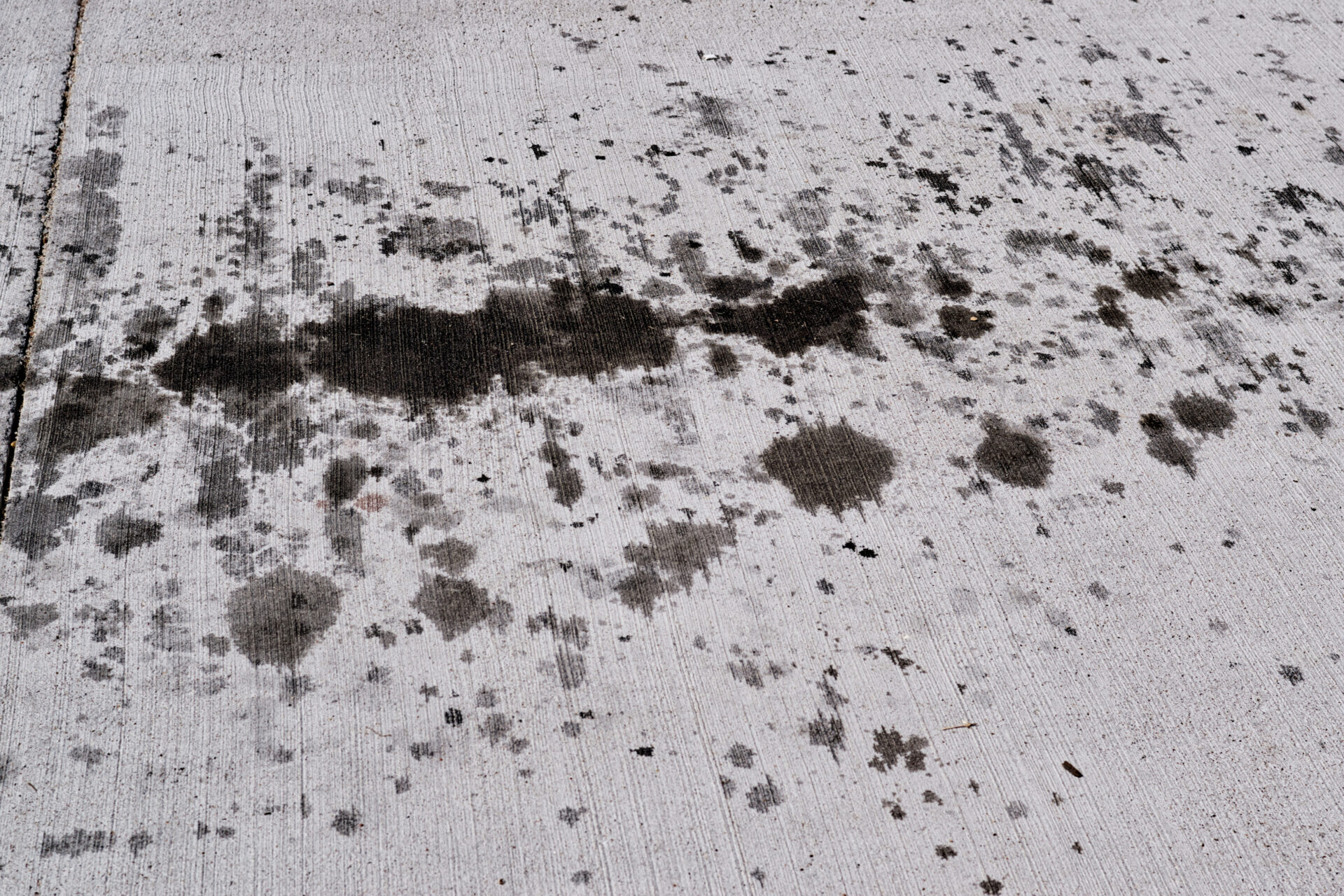
Black stains on concrete have a way of making clean properties look neglected. Homeowners scrub, rinse, and pressure wash, yet the stains barely fade. That’s because most black stains aren’t simple dirt — they’re the result of organic growth and deep-set contamination.
Professional black stain removal targets the root of the problem instead of just cleaning the surface.
Black staining on concrete is usually caused by a combination of moisture and organic growth. Common sources include:
Over time, these contaminants penetrate the porous concrete and bond to it, making stains difficult to remove.
Pressure washing can remove loose dirt, but it often fails to eliminate the organisms causing black stains. In many cases, pressure washing only cleans the surface while leaving growth embedded in the pores.
High pressure can also damage concrete, opening pores further and allowing stains to return faster.
Even if black stains fade temporarily, they often return because spores remain behind. Moisture and shade allow them to reactivate quickly.
Without proper treatment, pressure washing alone becomes a short-term fix rather than a lasting solution.
Professional black stain removal uses specialized treatments designed to break down organic growth at the source. These solutions kill algae, mildew, and mold rather than just washing them away.
Controlled pressure is then used to rinse surfaces evenly, lifting stains without damaging the concrete.
Black stains are most often found on:
Treating all affected areas helps prevent regrowth.
Scrubbing with harsh chemicals or increasing pressure can etch concrete and leave uneven discoloration. DIY treatments may also spread spores to nearby areas, causing stains to reappear elsewhere.
Professional methods ensure stains are removed safely and evenly.
Treating stains at the root keeps concrete cleaner longer.
Gentle methods prevent surface damage.
Removing organic buildup improves traction.
Clean concrete looks brighter and more consistent.
Most properties benefit from black stain treatment once per year, though shaded or damp areas may need more frequent attention.
Routine maintenance prevents stains from becoming deeply embedded.
Waiting until stains become severe makes removal harder. Early treatment keeps concrete in better condition and reduces long-term maintenance needs.
Professional care focuses on preventing regrowth, not just cleaning what’s visible.
Professionals understand how organic stains behave and how to eliminate them safely. Using the right solutions and pressure ensures effective, lasting results.
This approach saves time, effort, and frustration.

If black stains won’t come off with regular cleaning, professional black stain removal can restore your concrete safely and effectively.
Schedule a free consultation today and bring your concrete back to a clean, uniform appearance.
Give your home or business the care it deserves. Request a free quote now and let Dirt Defense provide spotless results with unmatched reliability.