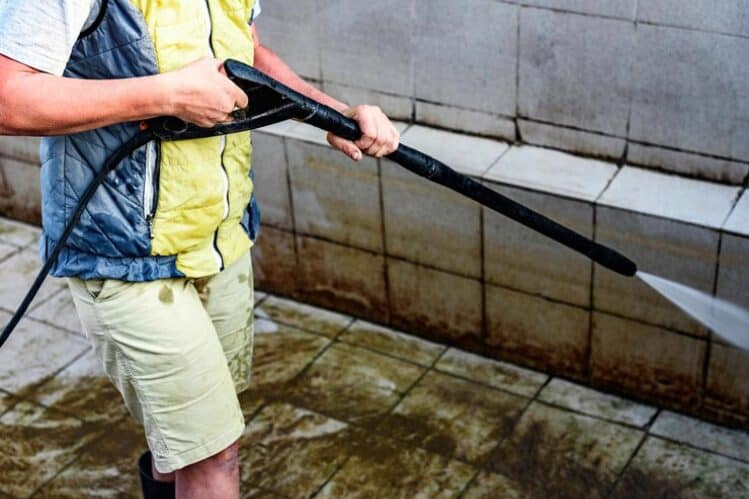
That white, chalky residue on concrete, stone, or pool areas isn’t dirt — it’s calcium carbonate. Calcium forms when hard water evaporates and leaves minerals behind.
Over time, those minerals harden and bond to surfaces, creating stains that regular cleaning can’t remove.
Professional calcium removal is required once buildup reaches this stage.
Calcium buildup forms anywhere water repeatedly dries on a surface. The most common areas include:
If water hits the same spot regularly, calcium is likely forming.
Calcium buildup doesn’t stay the same — it compounds. Each new layer sticks to the previous one, making stains thicker and harder over time.
Left untreated, calcium:
Early removal protects surfaces.
Calcium isn’t surface dirt — it’s a mineral deposit. Pressure washing alone usually does nothing or makes the surface look uneven.
In some cases, high pressure can:
Calcium removal requires chemical treatment, not force.
Professional calcium removal uses surface-safe solutions designed to dissolve mineral deposits without damaging the underlying material.
Once the calcium is broken down, it’s gently rinsed away, restoring the surface’s natural texture and color.
This method removes buildup without etching or surface damage.
Store-bought acids and DIY solutions are often too harsh. Improper use can:
Professional services use controlled treatments matched to each surface type.
Eliminates chalky white staining.
Prevents etching and wear.
Rough calcium buildup can be abrasive or slippery.
Removes damaging mineral layers.
Professional calcium removal is effective for:
Each surface is treated using the appropriate method.
Calcium removal frequency depends on water hardness and exposure. Most properties benefit from professional removal every 1–3 years.
Routine maintenance prevents heavy buildup and reduces long-term damage.
Calcium buildup makes pool areas look dull and neglected. Once removed, tile lines are sharper, stone looks cleaner, and the entire pool area feels refreshed.
Many homeowners are surprised by how much brighter surfaces look after proper removal.
Professional treatments remove calcium at the bond level instead of scraping it. This slows reformation and keeps surfaces cleaner longer.
Correct technique also avoids damage that accelerates future mineral buildup.
Calcium stains don’t mean your concrete or stone is failing — they mean minerals are being left behind.
Removing them restores the surface and prevents unnecessary replacement.
Once calcium etches into concrete or stone, it can’t be reversed. Early professional removal prevents permanent damage and costly repairs.

If white calcium stains are covering your pool tile, concrete, or stone, professional calcium removal can restore your surfaces safely.
Schedule a free consultation today and protect your exterior surfaces from long-term mineral damage.
Give your home or business the care it deserves. Request a free quote now and let Dirt Defense provide spotless results with unmatched reliability.