Fences are constantly exposed to moisture, shade, and organic debris. Unlike driveways or patios, fences dry slowly — especially on shaded sides.
When algae, mildew, and dirt stay on wood, they trap moisture and accelerate rot, warping, and discoloration. Professional fence washing removes this buildup and protects the wood underneath.
Fence discoloration usually comes from organic growth, not dirt. Common causes include:
Once these contaminants embed into wood, basic rinsing won’t remove them.
Algae and mildew hold moisture against wood fibers. Over time, this leads to:
Fence washing is not just cosmetic — it’s preventative maintenance.
One of the most common fence mistakes is using too much pressure. Excessive pressure can:
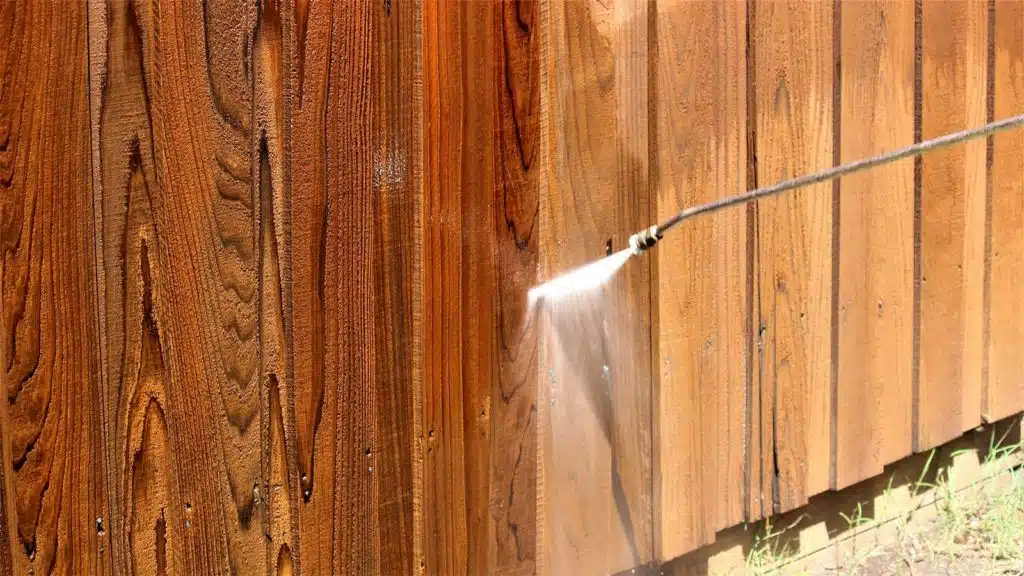
Fence washing requires low pressure and proper treatment, not force.
Professional fence washing begins with applying wood-safe treatments that break down algae and mildew at the root.
Once growth is neutralized, low-pressure rinsing gently removes buildup without damaging wood fibers. The result is clean, intact wood ready to dry properly.
Removes moisture-holding growth.
Eliminates green and black staining.
Creates proper surface conditions.
Clean fences elevate the entire yard.
Professional fence washing is effective for:
Each fence is cleaned using surface-appropriate methods.
Most wood fences benefit from professional washing every 1–2 years. Fences in shaded or irrigated areas may require more frequent cleaning.
Routine washing prevents heavy buildup and surface damage.
DIY fence cleaning usually relies on pressure washers that are too strong. This leads to splintering, fuzzing, and uneven results.
Professional fence washing preserves wood structure while delivering consistent cleaning.
Removing algae and debris allows wood to dry properly after rain. Better drying slows rot and reduces future growth.
Clean fences perform better structurally.
Professional treatments kill organic growth at the root instead of spreading it. Correct technique avoids surface damage that accelerates future staining.
This keeps fences cleaner longer.
Replacing a fence is expensive. Fence washing costs far less and protects your investment for years.
It’s one of the simplest ways to extend fence life.

If your fence looks stained or weathered, professional fence washing can restore appearance and protect the wood.
Schedule a free consultation today and keep your fence clean, strong, and built to last.
Give your home or business the care it deserves. Request a free quote now and let Dirt Defense provide spotless results with unmatched reliability.