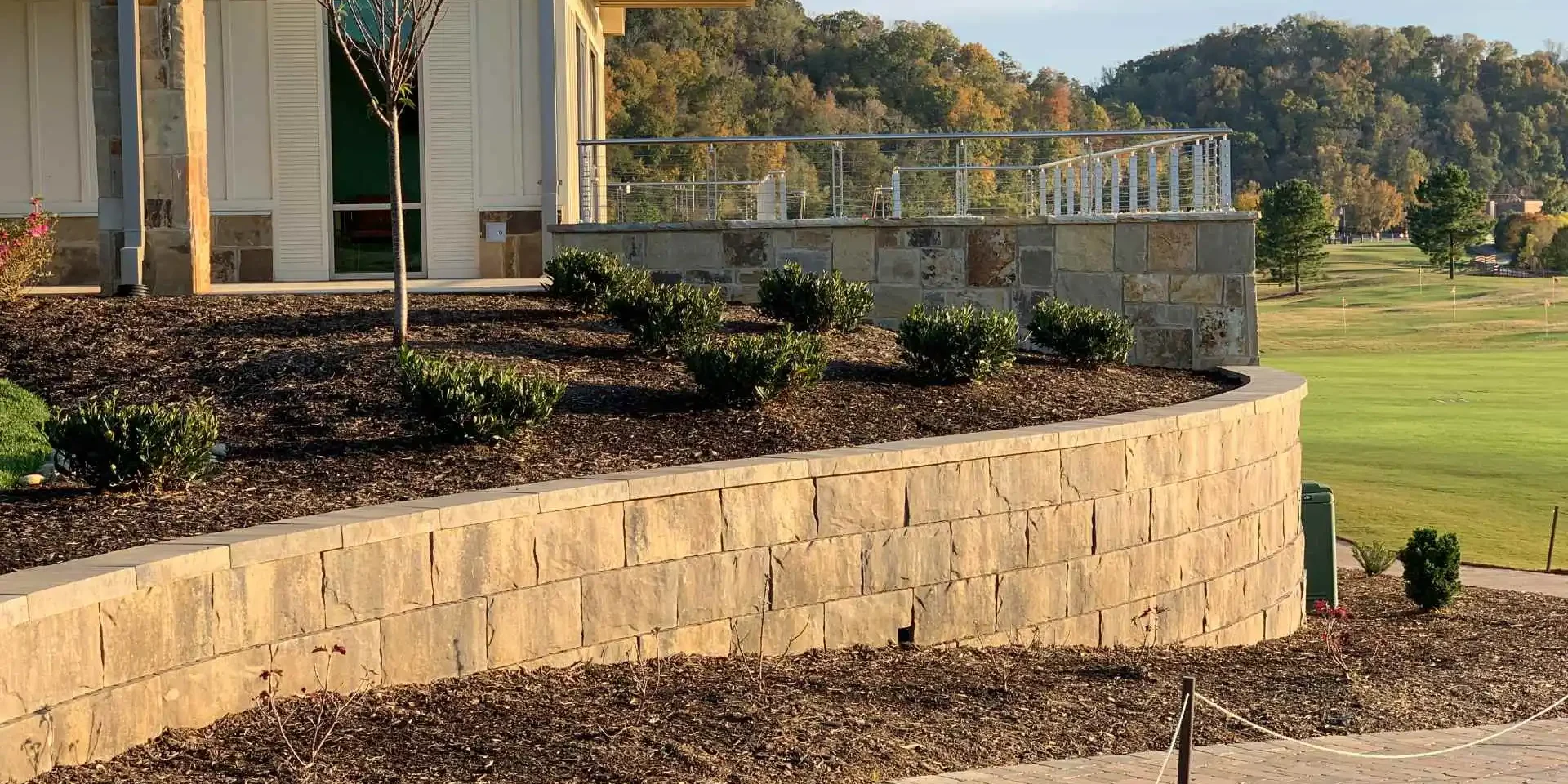
Retaining walls are constantly exposed to moisture, soil, irrigation runoff, and organic debris. Because they sit directly against landscaping, they tend to stay damp longer than other exterior surfaces.
This creates ideal conditions for algae, mildew, and dirt to accumulate. Over time, these contaminants cause retaining walls to turn dark or develop green staining that spreads across the surface.
Professional retaining wall cleaning removes this buildup and restores the natural appearance of stone or concrete.
Several environmental factors contribute to staining on retaining walls, including:
Because many retaining walls are made from porous materials, these contaminants absorb into the surface and become difficult to remove without professional cleaning.
Retaining walls are often a focal point in landscaping. When they appear stained or discolored, they can make the entire yard look poorly maintained.
Clean retaining walls help:
A simple cleaning can dramatically improve the appearance of the entire yard.
Because retaining walls hold back soil, they often trap moisture behind and around the structure. Combined with shade from plants and nearby structures, this moisture allows algae and mildew to grow quickly.
These organic growths spread across the wall and create a dark or green film on the surface.
Professional retaining wall cleaning eliminates this growth and helps slow down its return.
Many homeowners assume strong pressure is necessary to clean stone or concrete walls. However, excessive pressure can cause damage such as:
Professional cleaning uses the correct pressure and cleaning solutions to remove buildup safely.
Professional retaining wall cleaning begins with applying cleaning solutions that break down algae, mildew, and dirt embedded in the surface.
Once the contaminants are loosened, controlled pressure washing removes the buildup evenly without damaging the wall material.
This process restores the wall’s natural color and improves the overall appearance of the landscaping.
Professional retaining wall cleaning is effective for many types of materials, including:
Each material requires the proper cleaning method to maintain its integrity.
Removes dark stains, algae, and discoloration.
Clean walls make gardens and yards look well maintained.
Removes contaminants that trap moisture.
Prevents buildup that can weaken the surface over time.
Most retaining walls benefit from professional cleaning once every one to two years.
Walls located in shaded areas or near irrigation systems may require cleaning more frequently to prevent algae buildup.
Routine maintenance keeps retaining walls looking clean and prevents heavy staining.
Many homeowners attempt to clean retaining walls with a hose or rental pressure washer. While this may remove surface dirt, it rarely eliminates algae and embedded grime.
DIY cleaning often results in:
Professional equipment ensures thorough and even results.
When retaining walls are cleaned, landscaping appears brighter and more defined. Plants, garden beds, and hardscapes stand out more clearly.
Many homeowners notice their yard looks significantly newer and more organized after professional cleaning.
Allowing algae and dirt to remain on retaining walls can eventually lead to staining and surface deterioration.
Routine retaining wall cleaning protects the material and helps maintain the structure’s appearance and durability.
Preventative maintenance is far less expensive than repairing or replacing damaged landscaping features.

If your retaining wall looks dark, green, or stained, professional retaining wall cleaning can restore its natural appearance safely.
Schedule a free consultation today and bring back the clean, refreshed look of your landscaping with expert retaining wall cleaning.
Give your home or business the care it deserves. Request a free quote now and let Dirt Defense provide spotless results with unmatched reliability.