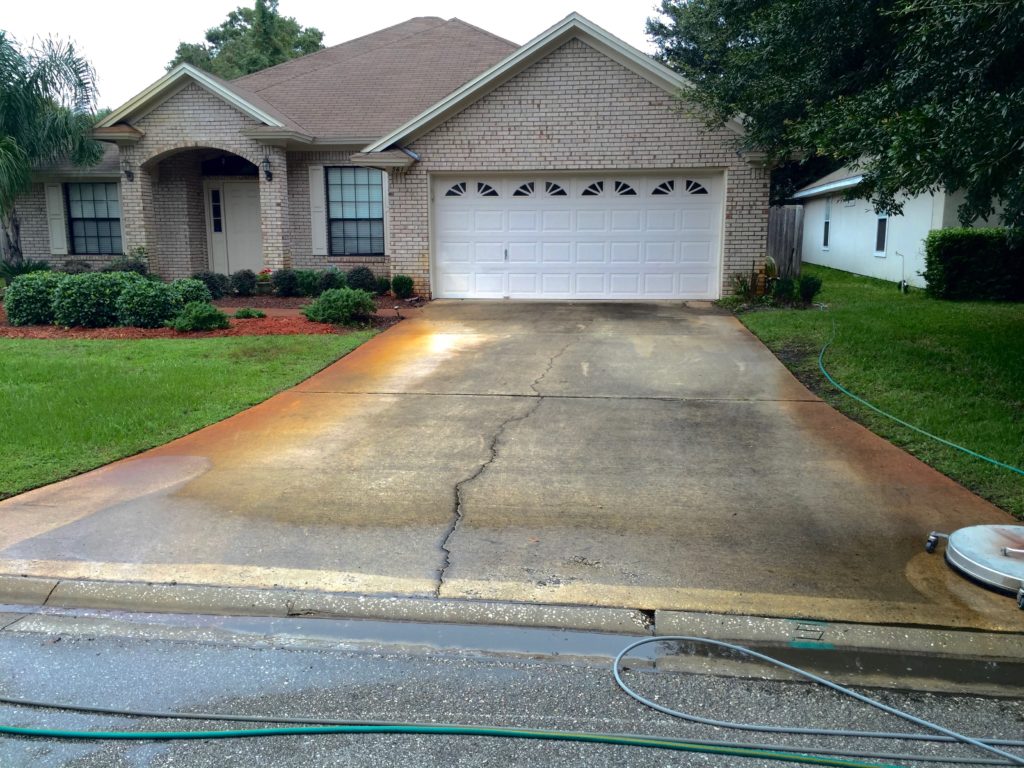
Rust stains don’t always come from visible metal. They’re often caused by iron in water, fertilizer runoff, metal furniture, or irrigation systems. When iron oxidizes, it leaves behind deep orange or brown staining that penetrates porous surfaces.
Once rust settles into concrete or stone, it becomes one of the most stubborn stains to remove.
Rust stains typically originate from:
Even small metal components can cause large stains over time.
Rust stains are chemically bonded to surfaces. Pressure washing alone:
This is why rust stains remain even after aggressive washing.
Store-bought rust removers and acids are often too harsh when used incorrectly. DIY attempts commonly cause:
Once a surface is etched, it cannot be restored.
Professional rust stain removal uses surface-specific treatments that dissolve iron safely without damaging the material underneath.
The process includes:
This removes rust while preserving surface integrity.
Professional rust stain removal is effective for:
Each surface requires a different approach to avoid damage.
Rust stains often return when the source isn’t addressed. Irrigation overspray and metal contact points usually cause repeat staining.
Professional removal clears existing stains and helps identify the cause so future buildup can be minimized.
Eliminates orange and brown staining.
Avoids etching and surface damage.
Brightens concrete and stone instantly.
No trial-and-error cleaning.
The longer rust sits, the deeper it penetrates. Early removal:
Waiting makes rust harder — and sometimes impossible — to remove completely.
Rust stain removal is typically done as needed, depending on irrigation water quality and metal exposure.
Routine exterior maintenance helps prevent heavy rust buildup.
Professional treatments fully dissolve iron deposits instead of masking them. Proper technique prevents surface damage that attracts future staining.
This keeps surfaces cleaner longer.
Most rust stains can be removed safely when treated correctly and early. Ignoring them allows discoloration to set permanently.
Professional removal protects both appearance and surface health.

If rust stains are spreading across your concrete, stone, or siding, professional rust stain removal can restore your surfaces safely.
Schedule a free consultation today and eliminate rust stains before they cause permanent surface damage.
Give your home or business the care it deserves. Request a free quote now and let Dirt Defense provide spotless results with unmatched reliability.