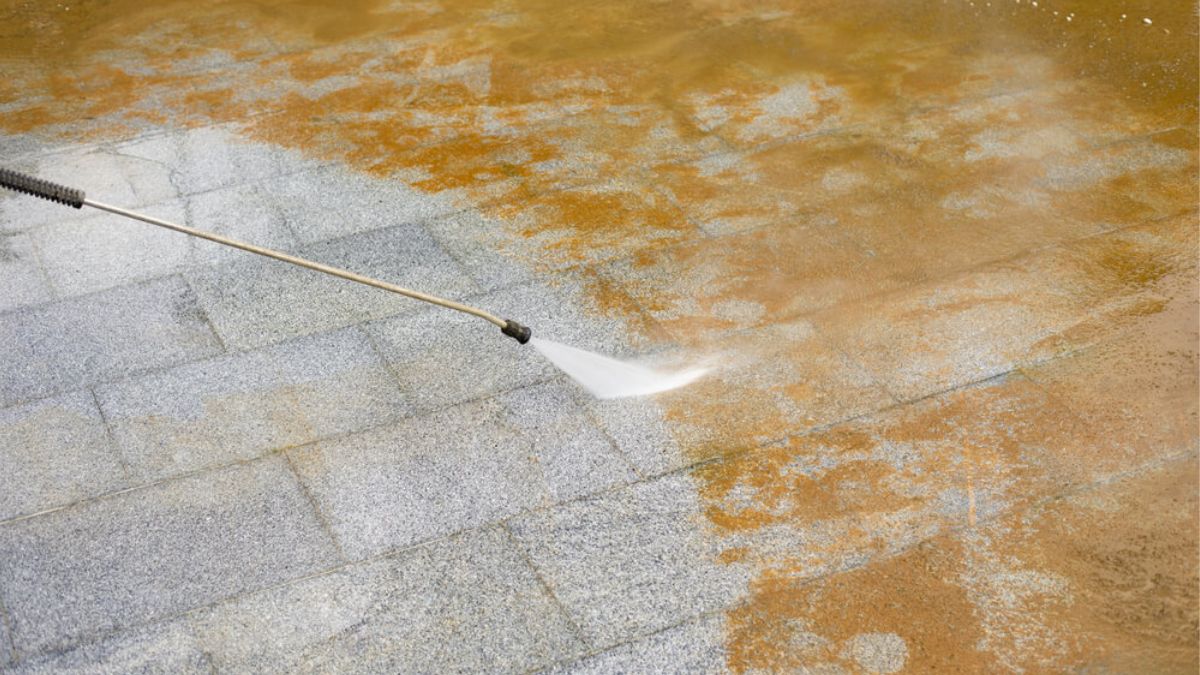
Rust stains are some of the most stubborn exterior stains homeowners deal with. Those orange or brown streaks don’t behave like dirt, algae, or grime — they’re the result of metal oxidation and mineral reactions.
Once rust forms, it bonds tightly to porous surfaces like concrete, stone, and masonry. That’s why regular pressure washing rarely removes it, even with high pressure.
Rust stains usually come from a few common sources:
When water carries iron across exterior surfaces and evaporates, it leaves behind rust deposits that darken over time.
Rust staining is progressive. Each time moisture hits the surface, more iron particles are deposited. Over time, stains spread outward and deepen in color.
This is why small rust spots often turn into large, noticeable stains if left untreated.
Rust is a chemical stain, not surface debris. Pressure washing can remove loose dirt around the stain, but it doesn’t break down the rust itself.
In many cases, aggressive pressure:
Rust removal requires chemical treatment — not force.
Home remedies and off-the-shelf rust removers often contain harsh acids. While they may lighten stains, they frequently cause:
Improper application can permanently damage the surface.
Professional rust treatment uses surface-safe solutions designed to neutralize iron and dissolve rust bonds without harming the material underneath.
The process:
This approach removes the stain while protecting the surface.
Rust staining is most often found on:
Treating all affected areas together prevents uneven results.
Rust stains can make surfaces look dirty and neglected, even when they’re structurally sound. In some cases, rust buildup also creates slick or uneven areas.
Removing rust:
It’s both cosmetic and preventative.
Rust treatment isn’t always required annually. Frequency depends on water quality, metal exposure, and irrigation patterns.
Properties with iron-heavy water may benefit from periodic treatment combined with routine exterior cleaning.
After removal, prevention matters. Helpful steps include:
Reducing iron exposure slows future staining.
Professional rust treatment removes iron deposits at the source instead of masking stains. Correct application avoids surface damage and helps results last longer.
This keeps exterior surfaces cleaner between services.
Many homeowners assume rust-stained concrete or stone needs replacement. In most cases, professional rust treatment restores appearance enough to avoid costly work.
Cleaning first is always the smartest option.

If orange or brown rust stains are taking over your exterior surfaces, professional rust treatment can restore a cleaner, more uniform look safely.
Schedule a free consultation today and remove rust stains the right way — without damage or replacement.
Give your home or business the care it deserves. Request a free quote now and let Dirt Defense provide spotless results with unmatched reliability.